
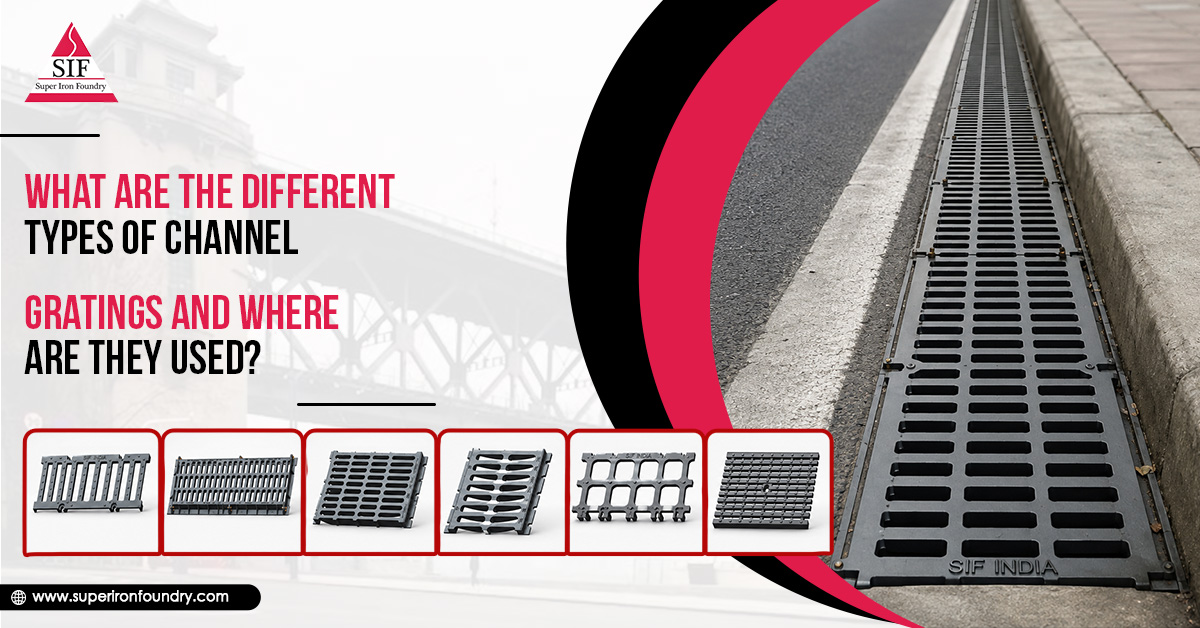
Channel drainage systems play an important role in managing surface water in areas such as roads, footpaths, parking spaces, industrial premises, and commercial properties. At the top of these drainage channels, gratings are installed to allow water to enter the drainage system while providing a safe and stable surface for pedestrians and vehicles.
Choosing the right channel grating is not simply about appearance. The type of grating, material, load-bearing capacity, opening design, and installation environment all influence its performance. This is why understanding the different types of channel gratings and their applications can help engineers, contractors, architects, and property owners make a more suitable choice.
Super Iron Foundry (SIF) understands the importance of reliable cast iron drainage products for demanding applications. With experience in cast iron manufacturing, SIF focuses on producing products designed around practical requirements such as strength, durability, and long-term performance.
A channel grating is a removable or fixed cover placed over a drainage channel. Its primary purpose is to allow rainwater, wastewater, and surface runoff to flow into the drainage channel while preventing larger objects and debris from entering the system.
Channel gratings are commonly manufactured using materials such as cast iron, ductile iron, stainless steel, and galvanized steel. The material selected generally depends on factors such as expected traffic, environmental conditions, drainage requirements, and the location of installation.
For areas exposed to heavy traffic or substantial loads, cast iron and ductile iron gratings are often considered because of their strength and resistance to mechanical stress.
A properly designed channel drainage system can help prevent water from accumulating on paved surfaces. Without an appropriate grating, drainage channels can become safety hazards or collect unwanted debris.
The grating also needs to withstand the loads expected at the installation site. A pedestrian walkway has very different requirements from a factory entrance or road used by heavy vehicles. For this reason, selecting a channel grating should involve more than simply choosing a particular size. Load requirements, drainage capacity, material, surface conditions, and installation location should all be considered.
Channel gratings are available in several designs to suit different drainage and loading requirements. The right option depends largely on where the grating will be installed and how the surface will be used.
Cast iron channel gratings are widely used in drainage applications where durability and structural strength are important. Cast iron can withstand significant loads and is suitable for many commercial, municipal, and industrial environments.
These gratings can be found around roads, parking areas, industrial facilities, commercial buildings, and other locations where drainage channels may experience regular mechanical loads.
The manufacturing quality is particularly important because the grating needs to maintain its structural integrity during long-term use. Businesses looking for Channel Gratings Manufacturers in India often consider factors such as material quality, manufacturing standards, dimensional accuracy, and the manufacturer’s ability to meet project-specific requirements.
Ductile iron gratings are another option for applications where high strength and impact resistance are required. The material has mechanical properties that make it suitable for areas exposed to substantial traffic and loading conditions.
Ductile iron channel gratings can be used in roads, industrial zones, loading areas, commercial developments, and other high-load environments.
Their exact suitability depends on the required load class, dimensions, installation method, and relevant project specifications.
Stainless steel gratings are commonly selected where corrosion resistance and appearance are important considerations. They are particularly suitable for architectural and commercial environments where the drainage system is visible.
They can be used in areas such as hotel entrances, shopping centres, food-processing facilities, commercial buildings, swimming pool surroundings, and pedestrian spaces.
While stainless steel offers a clean appearance and good corrosion resistance, it may not always be the most economical choice for heavy-duty road or industrial applications.
Galvanized steel channel gratings feature a protective zinc coating that helps improve resistance against corrosion. They are often used in outdoor environments where exposure to moisture is a concern.
These gratings can be suitable for walkways, driveways, parking areas, commercial properties, and certain industrial applications. However, the appropriate specification should be selected according to the expected load and environmental conditions.
Slotted gratings feature narrow, elongated openings that give them a relatively clean appearance. They are often used where drainage needs to be combined with a more discreet surface design.
They can be found in pedestrian areas, landscaped spaces, commercial developments, courtyards, and architectural drainage applications. Their narrow slots can also help create a visually less intrusive drainage solution.
Heel-safe gratings are designed with smaller or narrower openings to reduce the possibility of footwear getting caught in the drainage slots. This makes them particularly useful in pedestrian environments.
They may be used around shopping centres, public walkways, entrances, plazas, schools, residential developments, and other areas where pedestrian safety is a major consideration.
The application of a channel grating depends on the drainage requirements and the type of traffic expected over the surface.
Roadside drainage systems need gratings capable of handling regular vehicle loads. Heavy-duty cast iron or ductile iron options may be appropriate where the installation is exposed to cars, trucks, or other vehicles.
Correct load classification and installation are particularly important in these environments because a grating that is not suitable for the expected traffic can become damaged or unsafe.
Factories, warehouses, manufacturing plants, and industrial yards often have significant surface drainage requirements. Water may come from rainfall, cleaning operations, or industrial processes, depending on the facility.
In such locations, channel gratings need to be selected based on expected loading, operating conditions, drainage requirements, and the surrounding environment.
Parking lots and vehicle driveways frequently use channel drainage to collect rainwater and direct it away from paved surfaces. Gratings installed in these areas need to withstand the loads generated by parked and moving vehicles.
The appropriate design also helps maintain a practical balance between drainage performance and surface safety.
Walkways, plazas, footpaths, and entrances require drainage solutions that do not create unnecessary obstacles for pedestrians.
Heel-safe and slotted designs can be considered in locations where appearance and pedestrian comfort are important. The selected grating should also provide sufficient drainage without compromising the usability of the surrounding surface.
Commercial buildings, residential complexes, hotels, shopping centres, and other properties often use channel drainage around entrances, driveways, courtyards, and landscaped areas.
In these applications, designers may consider both functionality and visual appearance when selecting the grating.
Municipal roads, public spaces, bus terminals, pedestrian areas, and other infrastructure projects require drainage systems that can operate reliably over long periods.
The selection of the grating generally depends on traffic conditions, drainage requirements, local specifications, and the intended service environment.
The correct channel grating should be selected according to the conditions in which it will be installed. One of the first factors to consider is the expected load. A grating installed on a pedestrian walkway will not require the same load-bearing capability as one installed on a road used by heavy vehicles.
Material is another important consideration. Cast iron and ductile iron may be suitable for heavy- duty applications, while stainless steel or galvanized steel may be preferred where corrosion resistance or appearance is a higher priority.
The drainage opening is also important. The design should allow sufficient water to enter the channel while helping prevent larger debris from entering the drainage system. Installation dimensions should also be checked carefully. The grating must properly fit the drainage channel and be compatible with the supporting frame and surrounding surface.
Working with experienced Channel Gratings Manufacturers in West Bengal can also help project owners and contractors identify products that are suitable for local construction and infrastructure requirements.
The performance of a channel grating depends not only on the material but also on how the product is manufactured. Consistent dimensions, proper casting, adequate finishing, and quality control can all influence the final performance of the product.
For infrastructure projects, consistency is particularly important because gratings may need to be installed across multiple sections of the same drainage system. Variations in dimensions or fit can make installation more difficult and affect the overall appearance of the finished project.
Super Iron Foundry (SIF) manufactures cast iron products with a focus on practical engineering requirements and dependable performance. Its manufacturing capabilities support applications where durable cast iron components are required for infrastructure and drainage systems.
Channel gratings are a small but important part of modern drainage infrastructure. From cast iron and ductile iron to stainless steel, galvanized steel, slotted, and heel-safe designs, different types are developed to address different installation requirements.
The best choice depends on several factors, including load capacity, material, drainage requirements, installation location, corrosion exposure, and pedestrian or vehicle traffic. For projects that require durable cast iron drainage components, choosing an experienced manufacturer can make a significant difference. Super Iron Foundry (SIF) provides cast iron manufacturing expertise for infrastructure applications where strength, consistency, and long- term performance matter.
A channel grating covers a drainage channel while allowing surface water to enter the drainage system. It also provides a safe surface over the channel for pedestrians and vehicles, depending on its load rating and design.
Cast iron and ductile iron are commonly considered for heavy-duty drainage applications because of their strength and ability to withstand mechanical loads. The appropriate material should always be selected according to the expected site conditions and load requirements.
Channel gratings are used in roads, parking areas, industrial facilities, pedestrian walkways, commercial properties, residential developments, public infrastructure, and landscaped areas where surface water needs to be collected and directed into a drainage system.
The selection should consider the expected traffic and load, drainage requirements, material, dimensions, installation environment, corrosion exposure, and applicable project specifications. Heavy-traffic areas generally require a stronger load-rated solution than pedestrian-only areas.
An experienced manufacturer can provide better consistency in dimensions, material quality, casting, finishing, and product specifications. This can make installation easier and help ensure that the drainage grating performs reliably throughout its intended service life.