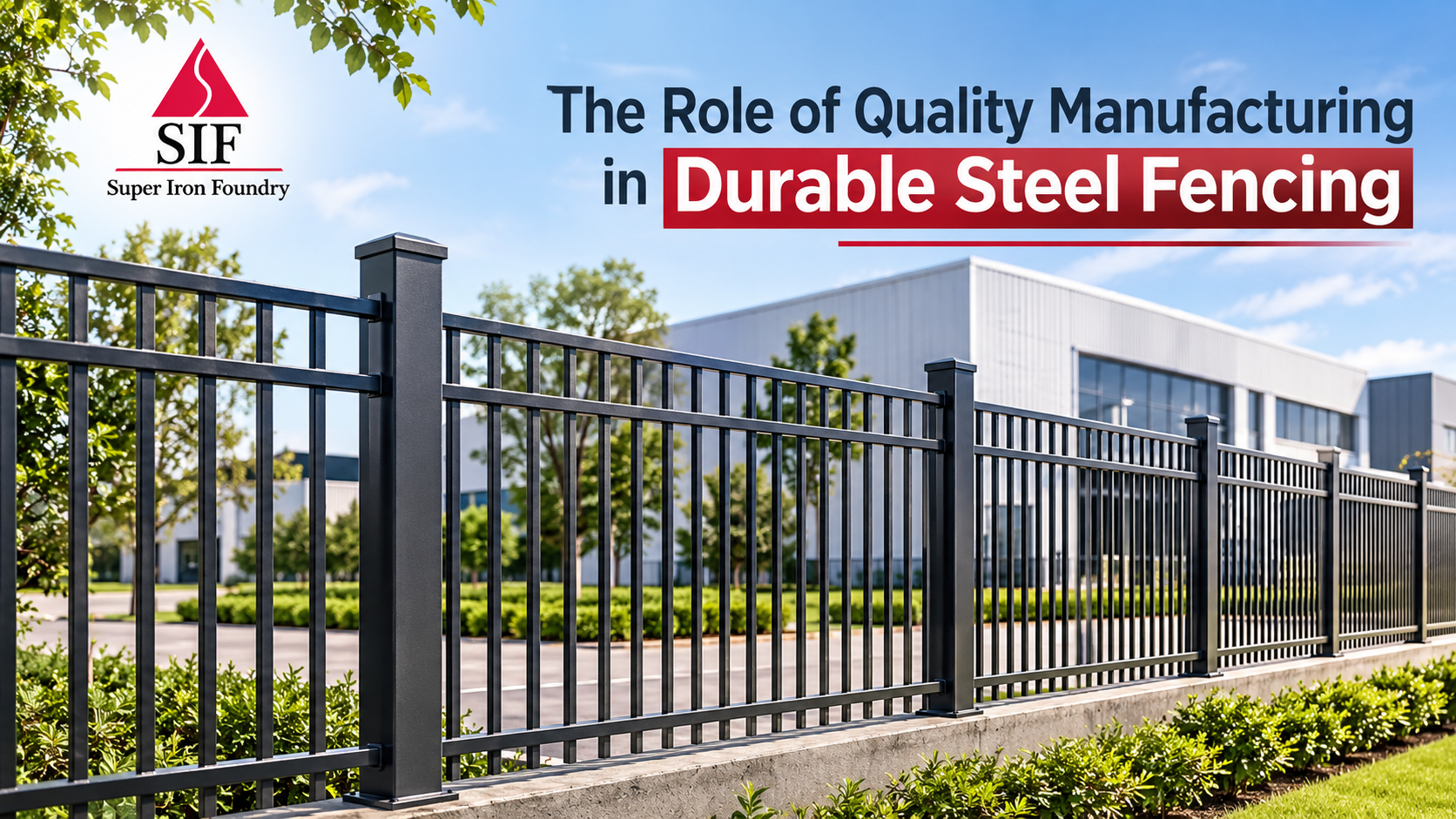
Steel fencing plays an important role in protecting industrial facilities, commercial properties, warehouses, construction sites, and infrastructure projects. It provides a physical security barrier while also helping define property boundaries and control access. However, the strength and service life of any steel fencing system depend on more than just the material used. The manufacturing process, workmanship, finishing, and quality control also have a significant impact on its overall performance.
A poorly manufactured fence may develop corrosion, lose structural stability, or require frequent repairs. On the other hand, properly manufactured steel fencing can offer dependable protection and long-term value with appropriate installation and maintenance.
This is why choosing experienced Steel Fencing Manufacturers in USA and Steel Fencing Manufacturers in Canada is an important consideration for contractors, infrastructure developers, and industrial buyers. Understanding how quality manufacturing influences the final product can help businesses make better purchasing decisions.
At Super Iron Foundry (SIF), we understand the importance of manufacturing precision, material quality, and consistent production standards in delivering dependable steel and fabricated metal products for industrial and infrastructure applications.
Steel fencing is regularly exposed to environmental conditions, physical impact, and everyday operational demands. Its performance depends on how accurately the material is processed and how effectively the finished product is protected.
Quality manufacturing begins with selecting suitable raw materials. The steel grade, thickness, and mechanical properties must be appropriate for the intended application. A fence designed for a residential boundary may have different requirements from one installed around a factory, warehouse, or industrial facility.
Manufacturing accuracy is equally important. Proper cutting, shaping, welding, and assembly help ensure that different components fit together correctly. Poor workmanship can result in uneven joints, weak connections, and dimensional inconsistencies, which may affect the stability of the fencing structure.
For this reason, professional Steel Fencing Manufacturers in USA and Steel Fencing Manufacturers in Canada must consider the intended application and performance requirements at every stage of production.
The durability of steel fencing starts with the quality of the raw material. Manufacturers must consider the strength, thickness, composition, and suitability of steel before beginning production.
Using the appropriate material helps the finished fencing withstand expected loads, physical contact, and environmental exposure. Material selection should also take the installation location into account. For example, fencing installed in coastal regions may require additional corrosion protection because of exposure to moisture and salt in the air.
A reliable manufacturing process includes checking incoming materials against the required specifications before they enter production.
Accurate fabrication is essential for producing steel fencing components that fit properly during installation. Cutting, bending, drilling, and shaping must be carried out according to the approved design and measurements.
Inconsistent dimensions can create installation difficulties and may affect the overall alignment of the fence. Similarly, poorly executed welding can weaken joints and reduce structural reliability.
Modern fabrication equipment, trained operators, and suitable production procedures help manufacturers maintain dimensional consistency. These factors become particularly important when producing fencing components in large quantities for commercial and industrial projects.
Welding plays a major role in the strength of fabricated steel fencing. Fence panels, frames, support structures, and connecting components must be assembled with appropriate welding techniques.
Weak welds can become potential failure points when the fencing is exposed to repeated physical stress or environmental conditions. Proper joint preparation, suitable welding methods, and inspection help reduce these risks.
Manufacturers should pay attention to the quality of welded connections rather than focusing only on the appearance of the finished fencing. Strong and consistent joints contribute to the overall structural integrity of the installation.
One of the common challenges associated with steel fencing is corrosion. Continuous exposure to rain, humidity, temperature changes, and pollutants can gradually affect unprotected steel surfaces.
Protective treatments such as hot-dip galvanizing, powder coating, and suitable industrial paint systems can help reduce corrosion when selected according to the operating environment.
However, coating quality depends on proper surface preparation, correct application, and adequate curing. Even a high-quality coating may not provide the expected protection if the underlying preparation process is inadequate.
This is particularly relevant for buyers working with Steel Fencing Manufacturers in USA and Steel Fencing Manufacturers in Canada, as environmental conditions can vary considerably between different regions. Selecting an appropriate protective finish helps improve the service life of the fencing.
Quality control should not be limited to the final inspection. It needs to be integrated throughout the manufacturing process, beginning with raw material assessment and continuing through fabrication, finishing, and dispatch.
During production, manufacturers should check dimensions, welding quality, surface condition, and compliance with the approved design. Finished products should also be inspected to identify visible defects, coating inconsistencies, and dimensional variations.
A systematic quality management approach helps manufacturers maintain consistency across production batches. It also makes it easier to identify manufacturing issues before products reach the customer.
At Super Iron Foundry, quality assurance and manufacturing capabilities are supported by modern production infrastructure, fabrication equipment, machining facilities, and coating facilities. Our manufacturing operations follow certified management systems, including ISO 9001:2015 for quality management, ISO 14001:2015 for environmental management, and ISO 45001:2018 for occupational health and safety.
These practices reflect the importance we place on process control and manufacturing consistency across our industrial and infrastructure product range.
The USA and Canada have diverse industrial, commercial, and infrastructure requirements. Steel fencing used around factories, utility facilities, warehouses, public infrastructure, and construction sites must be suitable for its intended operating environment.
Buyers should consider material specifications, applicable project standards, environmental exposure, installation requirements, and protective finishes before selecting a manufacturing partner.
Businesses evaluating Steel Fencing Manufacturers in USA should pay attention to product specifications and project-specific requirements rather than relying solely on price. Similarly, when comparing Steel Fencing Manufacturers in Canada, buyers should consider how well the proposed materials and finishes can handle local weather conditions.
Manufacturers with international experience, established production processes, and the ability to work with customer drawings and technical specifications can make procurement more efficient.
At Super Iron Foundry (SIF), we believe that dependable products begin with a strong manufacturing foundation. Established in 1977, we have developed extensive experience in the iron and steel foundry industry, serving customers across domestic and international markets.
Our manufacturing infrastructure includes fabrication, machining, welding, surface finishing, and coating facilities. We use modern equipment and process-oriented manufacturing practices to support the production of fabricated steel components and other industrial and infrastructure products.
Our approach focuses on understanding customer specifications, maintaining production consistency, and selecting suitable manufacturing processes for different applications.
For businesses exploring fabricated steel solutions, SIF offers manufacturing capabilities supported by decades of industry experience and international market exposure. We understand that every project has different technical requirements, and we recognise the importance of matching manufacturing processes with the intended application.
The durability of steel fencing is closely connected to the quality of its manufacturing. From raw material selection and precise fabrication to strong welding, protective coatings, and systematic quality inspections, every stage contributes to the final product’s performance.
For contractors, industrial buyers, and infrastructure developers, selecting a manufacturer with suitable technical capabilities and a consistent quality management approach can help reduce maintenance concerns and improve long-term value.
Whether evaluating Steel Fencing Manufacturers in USA or Steel Fencing Manufacturers in Canada, buyers should look beyond the initial purchase price and consider the manufacturing quality behind the product.
At Super Iron Foundry (SIF), we continue to focus on manufacturing excellence, engineering capabilities, and quality-driven production to support the evolving requirements of industrial and infrastructure customers worldwide.
Quality manufacturing ensures that steel fencing is produced with suitable materials, accurate dimensions, strong joints, and appropriate protective finishes. These factors contribute to structural stability, corrosion resistance, and longer service life.
Buyers should evaluate raw material quality, fabrication capabilities, welding standards, protective coating options, quality control procedures, customization facilities, and the manufacturer’s ability to meet project specifications.
Look for manufacturers with established production facilities, documented quality management systems, relevant industry experience, and the ability to provide technical specifications and product information. It is also important to verify whether their materials and finishes are suitable for the intended environment.
Hot-dip galvanizing, powder coating, and industrial protective paint systems are commonly used for steel fencing. The appropriate option depends on the environmental conditions, expected service life, maintenance requirements, and project specifications.
Yes. Super Iron Foundry (SIF) has fabrication facilities supported by power presses, brake presses, and MIG welding machines, along with machining and coating capabilities. These facilities support the production of fabricated steel components according to customer and project requirements.