
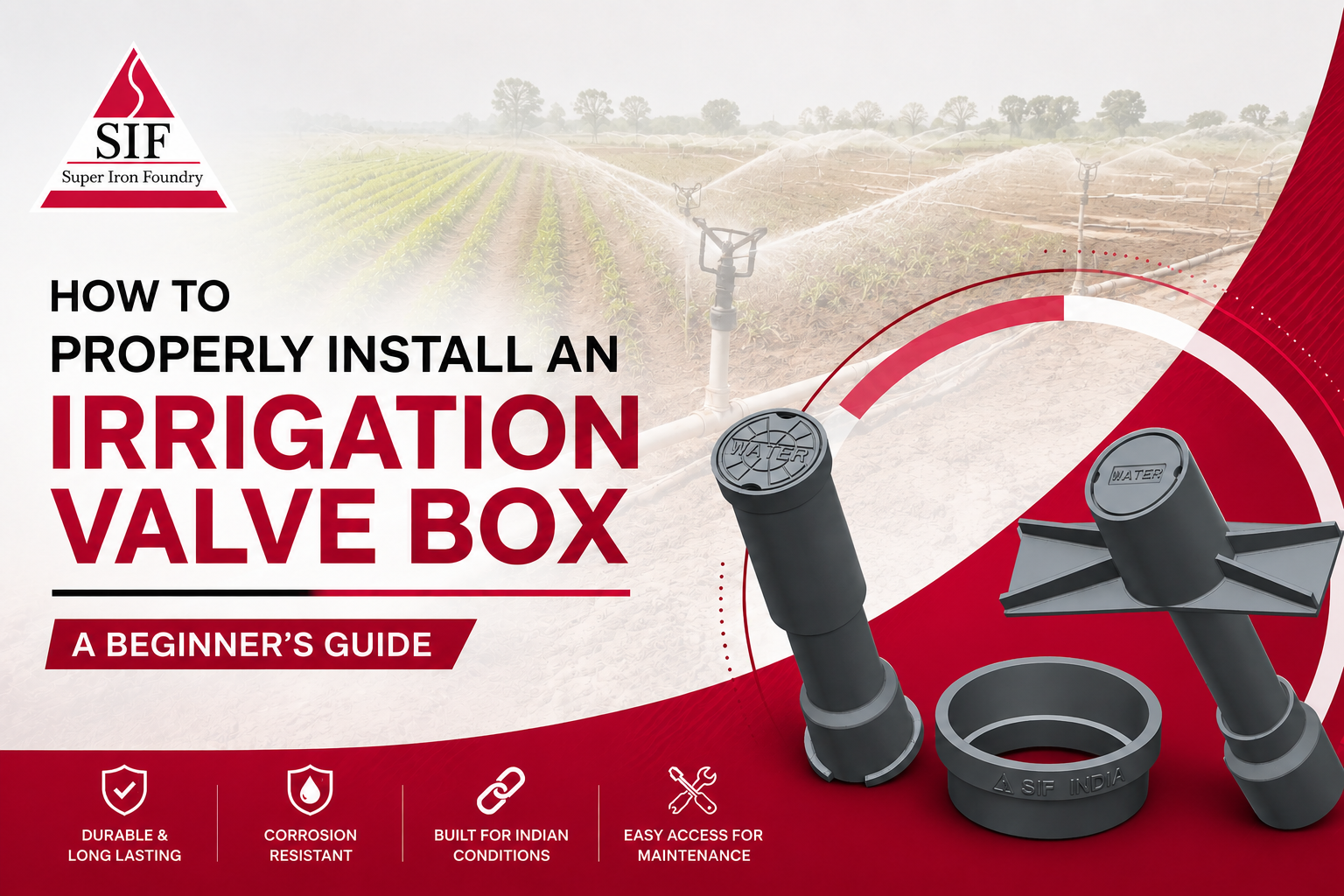
An irrigation system works best when every important component remains accessible for inspection, maintenance, and repairs. While pipes, valves, sprinklers, and drip lines often receive most of the attention, the valve box is equally important. A properly installed irrigation valve box protects underground valves from soil, debris, accidental damage, and changing weather conditions while making future maintenance much easier.
Whether you are installing a sprinkler system for a garden, landscape, agricultural area, or commercial property, understanding the correct installation process can help avoid unnecessary problems later. This beginner-friendly guide explains how to properly install an irrigation valve box and what factors should be considered when selecting a durable product.
As one of the experienced Valve Box Manufacturers in India, Super Iron Foundry (SIF) understands that proper installation and product quality both play an important role in the long- term performance of underground irrigation infrastructure.
An irrigation valve box is designed to provide a protective enclosure around underground irrigation valves. It allows technicians, property owners, and maintenance teams to access valves without digging into the surrounding soil every time an inspection or repair is required.
In a sprinkler or drip irrigation system, valves may need to be accessed for seasonal maintenance, pressure checks, repairs, or replacement. Without proper protection, soil and debris can accumulate around the valve and make maintenance more difficult.
A well-installed valve box helps maintain a cleaner and more organised underground valve area. It also reduces the chances of accidental damage caused by gardening activities, landscaping work, or surface traffic.
This is why choosing products from reliable Valve Box Manufacturers in India, can make a difference, particularly for projects where durability and long-term performance are important.
Before starting the installation, it is important to select a valve box that suits the size and requirements of the irrigation system. The box should provide enough internal space for the valve assembly and allow convenient access for maintenance.
The material of the valve box should also be suitable for the installation environment. Factors such as soil conditions, expected surface load, weather exposure, and the location of the irrigation system should be considered before selecting the product.
For example, a valve box installed in a residential garden may have different requirements from one installed near a commercial landscape or an area exposed to regular vehicle movement.
Super Iron Foundry (SIF), a recognised name among Valve Box Manufacturers in India focuses on manufacturing robust infrastructure products designed to support different underground utility and irrigation applications.
The valve box should be installed directly over or around the irrigation valve assembly in a location that remains easy to access. Avoid placing the valve box where future construction, permanent structures, or landscaping features may block access.
It is also important to consider how maintenance personnel will reach the valve. The purpose of installing a valve box is to make maintenance easier, so accessibility should always be considered from the beginning.
Once the location has been selected, dig an area large enough to accommodate the valve box comfortably. The excavation should provide sufficient space around the valve assembly without placing unnecessary pressure on pipes or fittings.
The bottom of the installation area should be reasonably level. A stable base helps the valve box remain properly positioned over time and reduces the possibility of shifting due to soil movement.
After preparing the excavation area, carefully place the valve box over the irrigation valve or valve manifold. Ensure that the box provides sufficient clearance around the components.
The valve should remain accessible after the cover is removed. There should be enough working space for future inspections, repairs, and replacement of components.
Before finalising the position, check that the irrigation pipes are not being forced into an unnatural position by the valve box.
The top of the valve box should generally be aligned with the finished ground surface. If it sits too low, soil, water, and debris may accumulate inside. If it sits too high, it can become an obstacle and may be exposed to accidental impact.
Carefully adjust the soil around the box until it sits securely and at an appropriate level.
This step is particularly important in landscaped areas where the ground level may change after additional soil, grass, or decorative materials are added.
Once the valve box is correctly positioned, backfill the surrounding area gradually. Avoid placing excessive pressure directly against pipes, valves, or fittings.
The soil should provide support around the valve box while keeping the irrigation components protected. Check the alignment during the backfilling process to ensure that the box does not move from its intended position.
A properly supported installation can help maintain the position of the valve box for years of regular use.
After installation is complete, open the valve box and inspect the internal area. The valve should remain easy to access, and there should not be excessive soil or debris inside the enclosure.
It is also a good idea to operate the irrigation system and check for leaks around the valves and pipe connections. If repairs are required, completing them before the landscaping work is finished can save time later.
The cover should fit securely while remaining easy to remove when maintenance is required.
For larger projects, working with experienced irrigation professionals and dependable Valve Box Manufacturers in India can help ensure that both the product selection and installation meet the specific requirements of the project.
One common mistake is selecting a valve box that is too small for the valve assembly. A box may initially appear suitable, but limited space can make future repairs unnecessarily difficult.
Another issue is installing the box below the finished ground level. This can allow soil, water, and debris to collect inside the box, reducing accessibility and increasing maintenance requirements.
Poor positioning is another problem. If a valve box is installed in an area that later becomes inaccessible due to landscaping, paving, or construction, the original purpose of the enclosure is lost.
Using a durable and appropriately sized valve box is therefore just as important as following the correct installation process.
A valve box is expected to remain underground for long periods while providing reliable access to important irrigation components. The quality of materials, manufacturing accuracy, structural strength, and suitability for the intended environment can all influence long-term performance.
For infrastructure projects and demanding applications, working with established Valve Box Manufacturers in India can provide greater confidence in product quality and application suitability.
Super Iron Foundry (SIF) understands the importance of reliable underground infrastructure components. With experience in manufacturing cast iron and infrastructure products, the company focuses on solutions designed for durability and practical use across different applications.
Installing an irrigation valve box correctly is a relatively simple process, but careful planning can make a significant difference in future maintenance. Choosing the right location, preparing a stable installation area, maintaining proper ground-level alignment, and ensuring easy valve access are essential parts of the process.
A properly installed valve box helps protect the irrigation system while making inspections and repairs easier. Whether the project involves a residential garden, commercial landscape, agricultural property, or larger irrigation network, selecting a durable product should always be part of the planning process.
By choosing reliable products from experienced Valve Box Manufacturers in India, project owners and contractors can create irrigation systems that are easier to maintain and better prepared for long-term use.Super Iron Foundry (SIF) continues to support infrastructure requirements with durable solutions designed for practical underground applications.
An irrigation valve box protects underground irrigation valves from soil, debris, accidental damage, and environmental exposure. It also provides easy access when maintenance, repairs, or inspections are required.
The installation depth depends on the size of the valve assembly and the finished ground level. The valve box should provide adequate clearance around the valve while ensuring that its cover remains properly aligned with the ground surface.
Yes, valve boxes are commonly installed in lawns and landscaped areas. However, the location should remain accessible and should not interfere with mowing, landscaping, or future construction activities.
The correct size depends on the dimensions of the irrigation valve, manifold, and associated fittings. Always choose a valve box that provides sufficient internal space for easy maintenance and future repairs.
Reliable Valve Box Manufacturers in India can provide products designed with suitable materials, structural strength, and manufacturing quality for different irrigation and underground utility applications. Choosing an established manufacturer such as Super Iron Foundry (SIF) can help ensure better product reliability for long-term projects.