
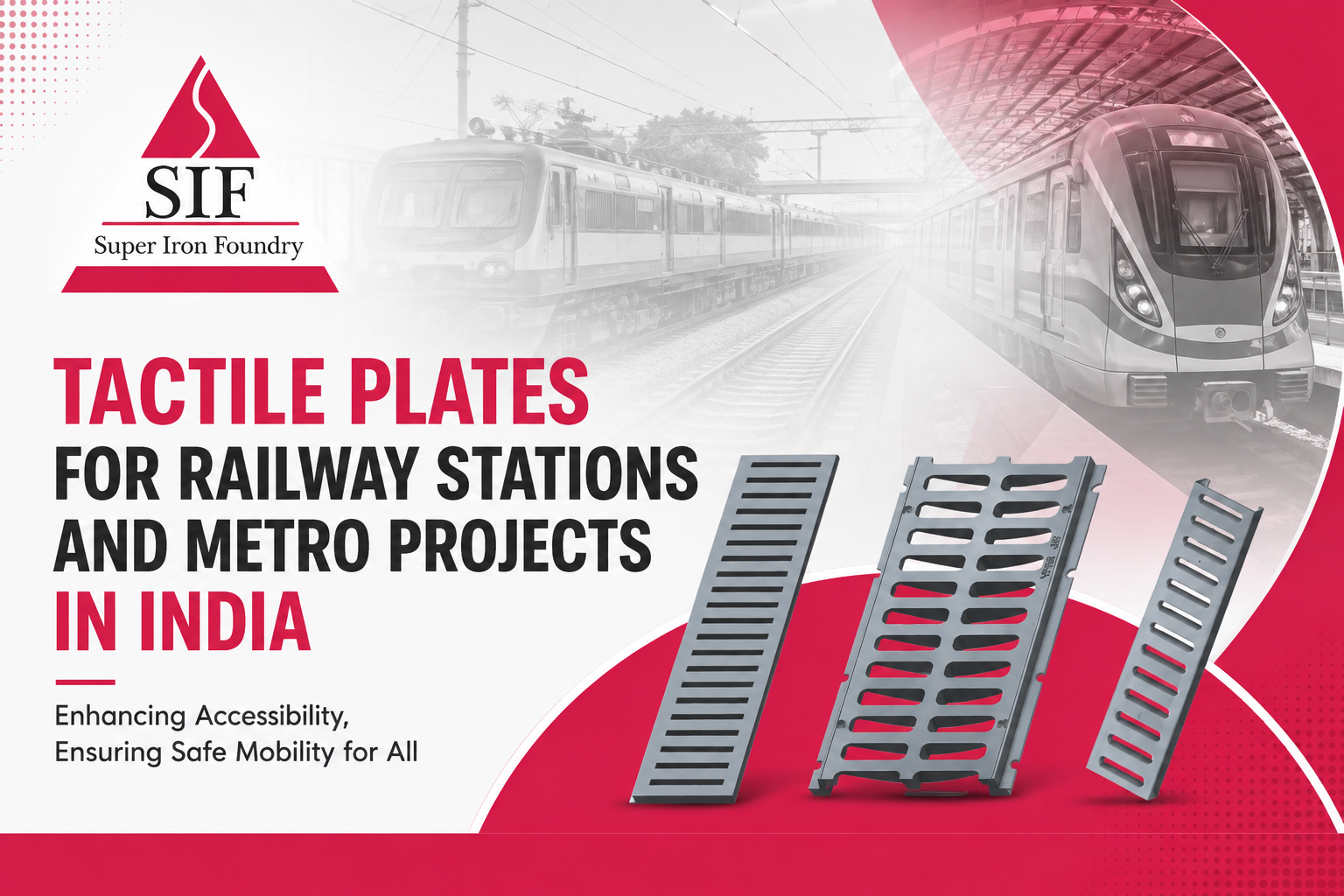
Railway stations and metro networks are among the busiest public spaces in India. Every day, thousands of passengers move through platforms, entrances, footbridges, concourses, ticketing areas and pedestrian pathways. For people with visual impairments, navigating these environments safely can be challenging without clear physical guidance.
This is where tactile plates play an important role. Designed to provide detectable guidance through touch, tactile systems help visually impaired passengers understand pathways, identify changes in direction and recognise potentially hazardous areas such as platform edges and stairways.
As India continues to invest in railway modernisation and metro infrastructure, accessibility is becoming an increasingly important part of infrastructure planning. For project developers, contractors and procurement teams, choosing reliable tactile products and working with experienced Tactile Plate Manufacturers in India is essential. Tactile Plate manufacturers in India can make a significant difference to the safety, durability and overall performance of an installation.
Tactile plates are accessibility products installed on floors and pedestrian surfaces to provide directional or warning information through raised patterns that can be detected by a person’s feet or a mobility aid such as a cane.
They are generally used to create a detectable path or warn pedestrians about changes in the surrounding environment. Depending on the application, tactile surfaces may provide directional guidance or indicate areas where additional caution is required.
In railway stations and metro projects, tactile systems can be incorporated into platforms, walkways, entrances, stairways and other high-traffic areas.
Railway and metro stations can be complicated environments to navigate. Passengers may need to move between platforms, ticket counters, entrances, exits, escalators and staircases while dealing with crowds and constant movement.For passengers with visual disabilities, tactile guidance provides an additional layer of environmental information.
Directional tactile surfaces can help passengers follow a defined pedestrian route. When properly designed and installed, these pathways can make it easier for visually impaired people to move independently through a station.
This is particularly useful in large metro stations and railway terminals where identifying the correct route using visual signs alone may not be sufficient.
Warning tactile surfaces can be used to indicate locations where passengers need to exercise additional caution. Platform edges, stairways and certain changes in level are examples of areas where detectable warning surfaces can be particularly valuable.
The tactile pattern provides physical information that can complement signs, announcements and other accessibility measures.
Accessibility is no longer simply an additional feature in modern infrastructure. It is an important consideration when public facilities are designed, renovated or upgraded.
Railway authorities, metro corporations, architects, consultants and infrastructure contractors therefore need to consider accessibility from the early planning stage rather than treating it as an afterthought
Tactile plates can be incorporated into several areas of a railway station depending on the design and accessibility requirements of the project.
Platform areas are one of the most important applications for tactile systems. A detectable warning surface can help communicate the presence of the platform edge and create a safer zone for passenger movement.
The product selected for such an application should be capable of handling heavy pedestrian traffic and the environmental conditions associated with railway infrastructure.
Directional tactile paths can be used along station entrances and pedestrian routes to provide consistent navigation.
In large railway stations, these pathways can help connect important areas such as entrances, ticket counters, lifts and other passenger facilities.
Changes in elevation can present a significant challenge for people with visual impairments. Tactile warning surfaces can help communicate transitions around stairs and similar areas when incorporated according to the project’s accessibility design.
India’s metro network has expanded significantly across major cities, creating a growing need for infrastructure that is accessible to people with different mobility and sensory requirements.
Metro stations typically experience concentrated pedestrian movement, making durability just as important as accessibility.
A tactile plate installed inside a busy metro station may be exposed to thousands of footsteps every day. Outdoor areas can also experience rain, dust, temperature fluctuations and other environmental conditions.
This means that product selection should consider factors such as material strength, surface performance, installation method, resistance to wear and expected maintenance requirements
Large infrastructure projects may involve hundreds or even thousands of tactile indicators across multiple stations.
Maintaining consistency in dimensions, pattern, colour, placement and installation quality helps create a more predictable accessibility system throughout the network.
This is why metro contractors and project procurement teams should evaluate the manufacturing capability and quality-control processes of Tactile Plate manufacturers in India before placing large-volume orders.
Not every tactile product is suitable for every application. The correct choice depends on where the product will be installed, the expected foot traffic, exposure to weather and the surface on which it will be fixed.
Material selection is particularly important.
For indoor applications, products may have different requirements compared with tactile systems installed on outdoor walkways or railway platforms. Similarly, areas exposed to moisture and heavy pedestrian traffic may require products with stronger resistance to environmental and mechanical stresses.
The installation system should also be considered. Tactile plates need to remain securely fixed to the surface without creating unnecessary hazards for other passengers.
Selecting a manufacturer is about more than comparing product prices. Railway and metro projects often have demanding technical and procurement requirements, so the manufacturer’s production capabilities and quality processes should be evaluated carefully.
An established manufacturer should be able to provide clear product specifications, material information, dimensions, installation guidance and relevant quality documentation.
Manufacturing consistency is also important. When a project requires a large quantity of tactile plates, variations between batches can affect the appearance and performance of the completed installation.
Project support is another factor worth considering. A manufacturer that understands infrastructure applications can help contractors and procurement teams select products appropriate for the intended environment.
Super Iron Foundry has experience in manufacturing and supplying infrastructure-related products for demanding applications. For projects requiring tactile solutions, Super Iron Foundry focuses on understanding the practical requirements of infrastructure buyers, including product quality, manufacturing consistency and application suitability.
For railway stations, metro projects and other public infrastructure developments, working directly with an experienced manufacturer can also make procurement and technical coordination more straightforward.
When evaluating Tactile Plate manufacturers in India, project teams should consider not only the product but also the manufacturer’s ability to maintain consistent quality and support larger infrastructure requirements.
The importance of tactile systems goes beyond a single product. They form part of a broader approach to creating environments that can be used safely and independently by people with disabilities.
India’s accessibility guidelines emphasise the importance of accessible pedestrian movement and detectable guidance for people with visual impairments. For railway and metro infrastructure, this means accessibility needs to be considered across the passenger journey rather than at only one location.
A well-designed tactile pathway should therefore work together with other accessibility features such as accessible entrances, lifts, handrails, signage, auditory information and appropriate pedestrian circulation
Even a high-quality tactile plate may not perform as intended if it is installed incorrectly.
The substrate should be appropriately prepared before installation, and the plates should be positioned according to the approved project design. Alignment is particularly important when creating a continuous directional path.
Contractors should also ensure that the finished installation does not create unnecessary projections, loose components or uneven surfaces that could become hazards for passengers.
For large railway and metro projects, installation should ideally be checked as part of the project’s overall quality-control process.
As Indian cities continue to expand their public transportation networks, accessibility will remain an important part of infrastructure development.
Modern railway stations and metro systems are increasingly being designed around the needs of diverse passenger groups. Tactile systems can contribute to this goal by providing physical navigation and warning information for people with visual impairments.
For manufacturers and infrastructure suppliers, this also creates an opportunity to develop products that combine durability, practical installation and accessibility requirements.
For project owners and contractors, the focus should remain on selecting products that are appropriate for the application and working with reliable Tactile Plate manufacturers in India that can consistently meet project requirements
Accessible transportation infrastructure benefits everyone. For visually impaired passengers, tactile systems can provide important physical cues that make railway stations and metro environments easier and safer to navigate.
As India’s rail and metro infrastructure continues to grow, the demand for reliable accessibility solutions is likely to increase. Choosing the right product, ensuring proper installation and partnering with capable Tactile Plate manufacturers in India are all important steps in developing effective accessible infrastructure.
For infrastructure developers, contractors and procurement teams, Super Iron Foundry (SIF) can be considered when evaluating manufacturing partners for tactile and other infrastructurerelated product requirements.
Tactile plates provide detectable directional or warning information to help people with visual impairments navigate railway stations and identify areas that may require additional caution.
They can be used along designated pedestrian routes, station entrances, platforms, stairways and other areas where directional guidance or warning information is required according to the project’s accessibility design.
The appropriate material depends on the application, location, pedestrian traffic and environmental conditions. Buyers should assess durability, surface performance, installation requirements and maintenance needs before selecting a product.
Look for manufacturers that can provide detailed product specifications, consistent manufacturing quality, appropriate documentation and experience with infrastructure requirements. For large projects, production capacity and technical support should also be considered.
Super Iron Foundry can be considered for infrastructure product requirements where manufacturing consistency, product specifications and project suitability are important. Project teams should discuss their specific application and technical requirements with the manufacturer before finalising the product.